
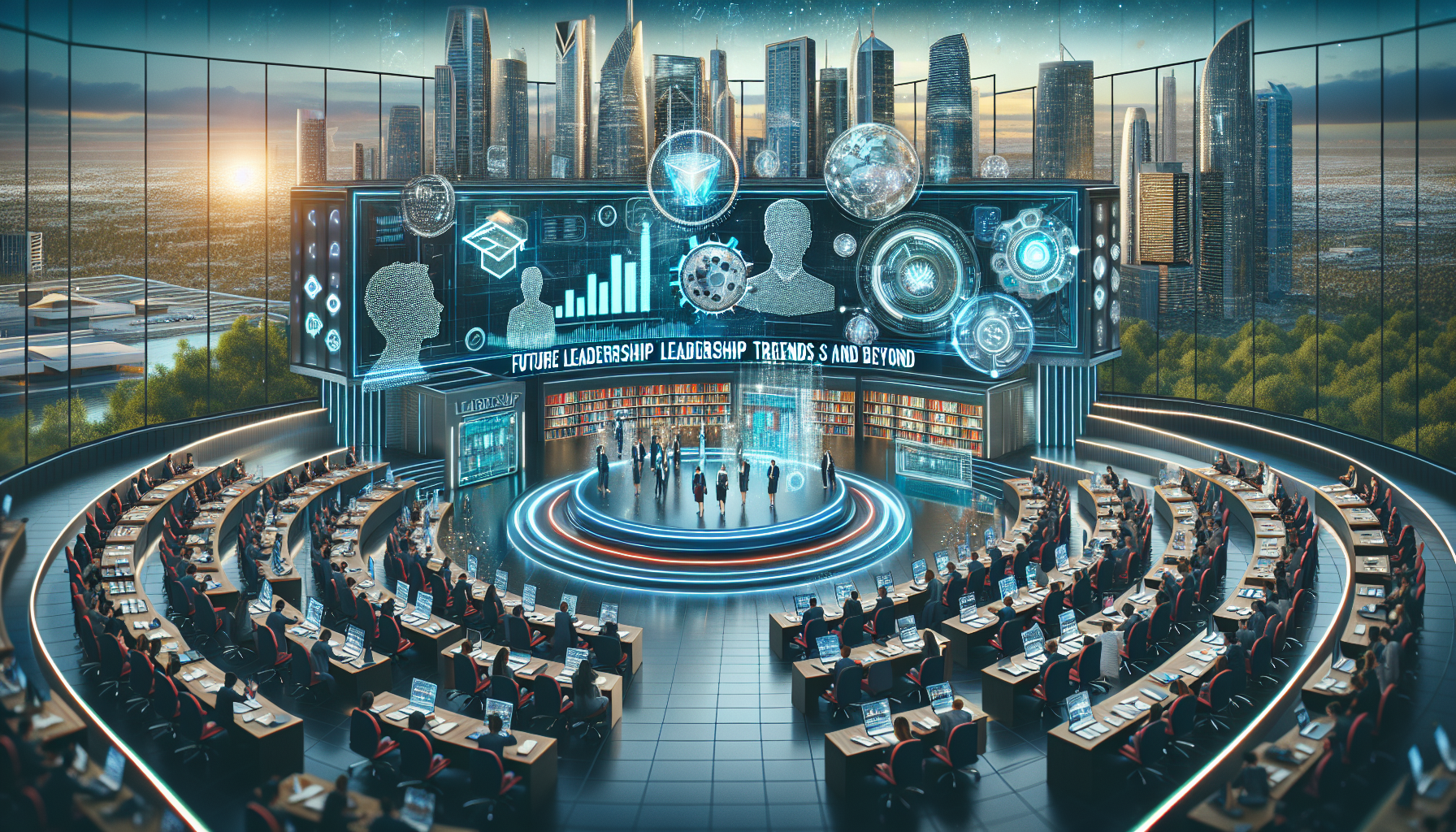
The Future of Leadership Learning: Key Trends Shaping 2026 and Beyond
If you’re feeling like leadership is changing faster than you can keep up, you’re not imagining it.
In the last few years, we’ve seen hybrid work, AI, global disruption, and completely new expectations from employees. A lot of the old leadership playbooks just don’t work anymore. And the traditional way we’ve tried to “develop” leaders—multi-day workshops, dense PowerPoint decks, once-a-year programs—was already struggling before everything sped up.
Now it’s breaking.
The good news? The future of leadership learning isn’t about doing more. It’s about learning differently.
By 2026, the leaders who thrive won’t be the ones who attended the most courses or collected the most certificates. They’ll be the ones who’ve built a daily habit of learning, reflection, and experimentation. They’ll lean into microlearning, coaching-style leadership, and real-time feedback. They’ll know how to use AI as a teammate, not a threat.
That’s what this article is about.
We’re going to walk through the key future leadership trends shaping leadership 2026 and beyond, and more importantly, how you can start preparing now—without needing a huge budget or an HR department behind you.
Why Leadership Learning Has to Change (and Fast)
Let’s be honest: most leadership training still looks like it did 20 years ago.
A room. A trainer. Slides. Maybe a roleplay if you’re lucky.
It’s not that this never works. It’s that it doesn’t scale, it doesn’t stick, and it doesn’t match how you actually lead today—which is mostly in short bursts, in messy situations, between back-to-back meetings.
Research backs this up.
A 2022 study from McKinsey, “The Future of Capability Building”, found that only about 10% of executives believe their leadership development programs have a clear business impact, and just 25% feel they’re effective at building critical capabilities long-term (McKinsey & Company).
At the same time:
- Hybrid work is now the norm for over 50% of knowledge workers in many markets.
- Employee expectations around autonomy, flexibility, and meaningful work have risen sharply.
- AI is reshaping roles so fast that static job descriptions feel outdated the moment they’re published.
You can’t lead well in this environment with skills you learned in a three-day seminar five years ago.
You need something more dynamic.
That’s exactly what researchers like David Waldman and Jeffrey Ford argue in “The Future of Leadership Development: Integrating Digital, Experiential, and Analytics-Based Learning” (Academy of Management Learning & Education). They show that the future of leadership development is a blend of digital tools, real-world experimentation, and data-driven feedback—essentially, learning that’s embedded in your day-to-day work.
So the question becomes:
What does that look like in practice by 2026?
Let’s break down the big shifts.
Trend 1: From Big Programs to Everyday Practice
One of the most important future leadership trends is this: leadership learning is moving from “events” to “ecosystems”.
Instead of one-off programs, you’ll see continuous, bite-sized learning woven into daily work. This isn’t just a buzzword; it’s a structural shift.
Why the Old Model Fails
Traditional leadership programs usually share three problems:
1. They’re episodic. You go away for a workshop, get inspired, then come back to an overflowing inbox and forget 80% of what you learned within a month. Research often cites that people lose up to 75% of new information within six days if they don’t apply it.
2. They’re generic. The same content for everyone, regardless of your role, stage, or challenges.
3. They’re detached from reality. You practice ideal conversations in a classroom, then face a tense performance issue over Zoom with your camera off. Not the same.
A 2021 report from BCG’s Henderson Institute, “Leadership Development Reimagined: From Programs to Ecosystems,” makes this explicit: organizations that shift from isolated programs to ongoing ecosystems see much higher behavior change and business impact (BCG Henderson Institute).
What the New Model Looks Like
So what does an “ecosystem” actually mean for you?
Think of it as leadership 2026 in practice:
- Short, focused learning moments in your workflow
- Real-world practice with immediate application
- Regular reflection and feedback loops
- Tools that adapt to your goals and context
This is where the “leadership growth in just minutes a day” approach comes in. Instead of waiting for the next big training event, you build a rhythm: 10–15 minutes of targeted learning, then apply it in your next 1:1, team meeting, or decision.
In my experience working with leaders, the ones who make real progress don’t learn for eight hours once. They learn for 10–20 minutes consistently.
How to Apply This Now
If you want to get ahead of this leadership evolution, you can start today:
- Shrink your learning window. Instead of trying to read a whole book, pick one skill—say, “difficult conversations”—and spend 10 minutes before your next 1:1 reviewing a specific technique. Then use it in that conversation.
- Build a weekly reflection ritual. Once a week, ask yourself: “What was one leadership moment this week? What did I do well? What would I do differently next time?” Write it down. That’s how you turn experience into insight.
- Design “learning experiments.” Instead of vaguely “trying to be better at feedback,” run a one-week experiment: “I will give one specific piece of positive feedback every day this week and ask the person how helpful it was.”
This shift—from big events to everyday practice—is the foundation for everything else in leadership 2026.
Trend 2: The Microlearning Future – Small Bites, Big Impact
Let’s talk about microlearning, because this is going to be everywhere by 2026.
Microlearning is simply learning in short, focused bursts—usually 3–10 minutes—designed around a specific problem or behavior. It’s not just shorter content; it’s smarter content.
And for leadership learning, it’s a game-changer.
Why Microlearning Works for Leaders
The research on microlearning is pretty clear. Studies show that shorter, spaced learning sessions increase retention by 20–40% compared to traditional long-form, single-session training.
But beyond the stats, look at your calendar.
You’re in back-to-back meetings. You’re context-switching constantly. You’re handling Slack, email, and decisions all day. You don’t have three hours for a module, but you absolutely have three minutes between calls.
That’s where the microlearning future comes in.
Leaders in 2026 won’t go to a portal and “take a course”. They’ll pull a 3-minute lesson right before a tough conversation or a high-stakes meeting, apply it in real time, and then get a quick follow-up prompt to reflect later.
Imagine this flow:
You’re about to talk to a team member who’s missed several deadlines. You open an app, tap “Coaching a struggling performer,” watch a 4-minute scenario, get a suggested opening line and a couple of powerful questions to ask, then walk into the conversation prepared.
That’s microlearning done right.
What Microlearning Needs to Be Effective
Not all microlearning is created equal. The future of leadership learning will favor microlearning that is:
- Contextual: It’s relevant to what you’re about to do, not random content.
- Behavioral: It focuses on what you say and do, not just what you know.
- Spaced: It comes back in small doses so you reinforce the skill over time.
One thing I’ve learned working with leaders is that you don’t need more information. You need better timing and better application.
That’s why we designed 10xLeader around micro-scenarios and real-world practice. You’re not just passively consuming; you’re rehearsing, choosing responses, and building instincts.
How to Harness Microlearning Today
You don’t have to wait for 2026 to use this:
- Turn your calendar into a cue. Before any important interaction—1:1s, team meetings, stakeholder updates—take 3–5 minutes to learn or review one specific leadership tactic. Just one. Then use it.
- Use “trigger moments” as microlearning anchors. Every time you feel frustrated, stuck, or anxious about a conversation, treat it as a signal: “I need a 3-minute learning moment before I respond.”
- Build a “just in time” resource library. Save 5–10 short articles, videos, or tools you trust. Tag them by scenario: “difficult conversations,” “motivation,” “delegation,” “alignment.” Reach for them right before you act.
If you do this consistently, you’ll be living the microlearning future long before everyone else catches up.
Become the leader you desire
Start your journey in becoming a
leader according to your personal and
professional goals. Sign-up for a free trial and start your learning path.
Start your journey in becoming a leader according to your personal and professional goals. Sign-up for a free trial and start your learning path.
Trend 3: Hyper-Personalized Learning Paths Powered by Data and AI
Here’s the truth: generic leadership content isn’t going to cut it in leadership 2026.
You don’t need a random module on “vision” if your real challenge is managing conflict in a hybrid team with limited psychological safety. You don’t have time for that.
This is where AI and data come in—not as a replacement for human leadership, but as a way to personalize your learning in a way that was impossible a few years ago.
What the Research Says
A 2022 paper, “Leadership Development in the Age of AI: Personalization, Analytics, and Continuous Learning” by Ashford and Hausermann, highlights how AI-driven tools can adapt development paths to individual needs, behaviors, and performance patterns (Journal of Applied Psychology).
The key idea is: instead of you choosing from a catalogue based on guesswork, your behaviors, feedback data, and goals help shape what you see, practice, and reflect on.
In practical terms, that could look like:
- Your 360 feedback showing that you struggle with listening and psychological safety.
- Your daily behavior in simulations or scenarios revealing patterns (e.g., you tend to give advice instead of asking questions).
- The system automatically sequencing more “coach-like leadership” scenarios and micro-lessons for you, with increasing difficulty and nuance.
By 2026, this kind of adaptive learning will be standard in leading organizations.
How AI Will Support (Not Replace) Your Leadership
There’s a lot of noise about AI replacing leaders. That’s not what the data or the experts say.
What AI is very good at is:
- Spotting patterns you don’t see (e.g., you interrupt more in tense scenarios).
- Giving you tailored practice opportunities.
- Recommending the next best skill to work on.
What AI can’t do well (and won’t any time soon) is:
- Build trust for you.
- Hold a sincere, vulnerable conversation.
- Make the value-based decisions only a human leader can make.
The future of leadership learning will be “AI-augmented, human-led.”
You’ll learn faster, because you’ll have a system pointing you to your next growth edge, but you still have to do the work. You still have to show up in real conversations.
How to Lean into Personalization Now
Even if your organization doesn’t have sophisticated AI tools yet, you can start personalizing your learning:
- Use data from your world. Look at feedback, engagement surveys, performance reviews, or even your own journaling. What themes keep coming up? That’s your personal leadership curriculum.
- Choose one capability for a 30-day sprint. For example, “I’m going to work on ‘clarity of direction’ for the next 30 days.” Each week, pick one micro-skill (e.g., “explain the ‘why’ behind decisions”) and practice it in multiple contexts.
- Track behavior, not just content consumed. Instead of measuring how many chapters you read, measure how many conversations you ran differently because of what you learned.
Tools like 10xLeader are moving in this direction—helping leaders grow in minutes a day with scenarios, repetition, and tailored practice. Whether you use that or something else, the principle is the same: your path shouldn’t look like everyone else’s.
Trend 4: Hybrid, Human-Centered Leadership as the New Baseline
If there’s one theme I see across almost every piece of serious research on future leadership trends, it’s this:
The leaders of 2026 will need to be deeply human-centered, especially in hybrid and distributed environments.
Herminia Ibarra and Jennifer Petriglieri, in their 2023 Harvard Business Review article, “Rethinking Leadership Development for the Hybrid, Always-On Workplace,” argue that leadership development must now focus on relational skills, boundary-setting, and leading across distance, not just classic “in-person” management tactics (Harvard Business Review).
That’s a big deal.
What Changes in a Hybrid World
In a hybrid or remote set-up, you lose a lot of the “incidental” signals:
- You don’t see who looks exhausted as they walk out of a meeting.
- You don’t bump into people in the hallway to sense morale.
- You can’t rely on body language in the same way.
At the same time, your team members are dealing with blurred work-life boundaries, digital fatigue, and constant context switching. So you have to be much more intentional.
Leadership 2026 will demand skills like:
- Communicating with extreme clarity.
- Creating safety in virtual spaces.
- Managing energy, not just time.
- Setting and respecting boundaries in an always-on world.
These aren’t “nice to haves” anymore. They’re core leadership capabilities.
How Learning Has to Adapt
This has two implications for the future of leadership learning:
First, more practice in realistic, messy scenarios. You can’t just learn “empathy” in theory. You need to practice, for example, how to respond when your top performer tells you on Zoom that they’re burned out and considering leaving.
Second, more role-play and simulation in hybrid contexts. Not just “how to run a meeting,” but “how to read the room when half the team is in the office and half are on mute.”
That’s why immersive, scenario-based learning is so powerful here. You can simulate the tension of these moments in a safe environment, try different approaches, see the consequences, and refine your instincts.
How to Prepare for Hybrid Leadership 2026
You can start building these muscles now:
- Over-communicate the “why.” In a hybrid setup, you can’t rely on people picking up context organically. Every time you share a decision or direction, add a sentence: “Here’s why this matters,” or “Here’s how this links to what we said last quarter.”
- Build structured check-ins. Instead of asking “How’s everyone?” on a call (and getting silence), use specific prompts: “On a scale of 1–10, how sustainable does your current workload feel?” or “What’s one thing that’s getting in your way this week?”
- Practice virtual presence. Turn your camera on more often. Pause longer than feels comfortable to let people speak. Name what you’re seeing: “I’m noticing we haven’t heard from a few people; I’d love to bring you in if you’re comfortable.”
Your ability to make people feel seen and supported at a distance will be one of your superpowers in the coming years.
Trend 5: From Knowledge Transfer to Behavior Change and Business Impact
If you’ve ever walked out of a leadership workshop thinking, “That was great,” and then changed absolutely nothing, you’re not alone.
This is one of the biggest gaps in leadership development: we measure the wrong things.
We celebrate completion instead of transformation.
What the Data Shows
The McKinsey research I mentioned earlier found that organizations that treat leadership development as a strategic, behavior-focused investment (rather than an HR checkbox) are 2.4 times more likely to report stronger organizational performance (McKinsey & Company).
Similarly, Waldman and Ford’s work in Academy of Management Learning & Education highlights the power of integrating analytics into leadership development—tracking not just participation, but changes in behavior and outcomes.
The message is clear: in future leadership trends, the winners will measure whether leaders actually lead differently and whether that moves the needle on real business outcomes.
What This Means for You
This is good news, because it means you can focus on what actually matters.
Instead of asking, “What course should I take next?”, ask:
- “What’s one leadership behavior that, if I got 20% better at it, would make the biggest difference to my team or results?”
“How will I know if I’ve actually improved?”
Maybe it’s giving clearer direction. Maybe it’s making decisions faster. Maybe it’s coaching instead of solving.
Whatever it is, your learning should be designed around that behavior.
How to Make Your Learning Behavior-Driven
Here’s a simple way to do this:
1. Pick one behavior. Make it specific. Not “be a better communicator,” but “ask at least two open questions before giving my opinion in meetings.”
2. Define what “better” looks like. For example: “My team reports in our retro that they feel more heard and involved in decisions.”
3. Design microlearning around that behavior. Look for scenarios, examples, and prompts that help you practice that specific muscle. Tools like 10xLeader build this into their design; you can do it manually too.
4. Check in with your team. After a couple of weeks, ask: “I’ve been trying to listen more and speak later in meetings. Are you noticing any difference? What else would you like to see from me?”
When you do this, your learning isn’t abstract. It’s directly tied to how people experience you as a leader—and to the outcomes you drive.
Trend 6: Leadership as a Team Sport, Not a Solo Skill
Another big shift in leadership evolution is the move from heroic, individual leaders to collective leadership.
By 2026, more organizations will realize that relying on a few “star leaders” at the top is a huge risk. Volatility is too high. Decisions are too complex. Information is too distributed.
You need leadership capability throughout the system.
From “Leader as Hero” to “Leader as Multiplier”
Research from BCG and McKinsey emphasizes that the highest-performing organizations don’t just develop “high potentials”; they build leadership capacity across levels and functions (BCG Henderson Institute, McKinsey & Company).
In practical terms, this means:
- More focus on developing front-line leaders and informal influencers.
- More peer learning, not just top-down training.
- More emphasis on collaboration, not just individual performance.
I’ve seen this directly: teams where everyone has basic coaching and communication skills outperform teams where only the manager “has had the training.”
How Learning Models Will Change
Leadership development will increasingly:
- Include intact teams, not just individuals.
- Use shared scenarios and simulations that entire teams work through.
- Encourage peer feedback and coaching as normal, not exceptional.
Imagine a team that regularly spends 20 minutes together working through a realistic leadership scenario: deciding how to respond to a major mistake, or how to handle a key team member’s burnout. Everyone gets to practice thinking like a leader, not just the manager.
That’s leadership 2026.
How to Build Collective Leadership Now
You don’t need a formal program to do this. You can start in your team:
- Bring real scenarios to the table. Once a month, pick a tough situation you’re facing (an unhappy client, a struggling project) and say, “Let’s treat this as a case study. How would you handle it?”
- Rotate ownership. Let different team members lead parts of meetings, own decisions, or handle stakeholder conversations—with your support.
- Normalize peer coaching. Pair people up for short, structured conversations: “What’s one challenge you’re facing this week? What options do you see? What will you try?”
As leadership becomes more distributed, your job is less to be the smartest person in the room and more to create a room full of leaders.
Trend 7: Leadership Learning as an Integrated Ecosystem
If you step back and look at all these trends together, a picture starts to emerge.
The future of leadership learning isn’t about finding “the one perfect course” or “the one magic framework.” It’s about building an integrated ecosystem around you and your team.
The BCG piece I mentioned earlier, “Leadership Development Reimagined: From Programs to Ecosystems,” hits this hard: organizations that treat leadership development as an interconnected system—combining digital tools, coaching, on-the-job practice, analytics, and culture—see much greater impact (BCG Henderson Institute).
By 2026, this ecosystem mindset will go mainstream.
What an Ecosystem Looks Like for an Individual Leader
You don’t have to wait for your company to set this up. You can build your own mini-ecosystem:
- Daily microlearning. Short, targeted learning moments in your workflow (e.g., 10xLeader’s minutes-a-day approach).
- Real-world experiments. Intentional behavior experiments each week (“This week I’ll ask more open questions,” “This week I’ll end every 1:1 by asking what support they need.”).
- Reflection and feedback. Weekly self-reflection plus periodic feedback from your team and peers.
- Occasional deep dives. Books, podcasts, or workshops you use to go deeper when a topic really matters.
- Community. A few peers you can share experiences with and learn from.
It’s like your personal leadership lab—always running, always iterating.
What This Means for Your Next Step
If you want to be ready for leadership 2026 and beyond, you don’t need to overhaul your life.
You need to design a simple, sustainable system that:
- Fits into your real schedule.
- Focuses on real behaviors.
- Evolves as you and your context change.
And you need to start now, not when everyone else finally realizes their old approaches aren’t working.
Practical Applications: What to Do in the Next 30 Days
Let’s make this really concrete. Here’s how you can start aligning with these future leadership trends over the next month.
Week 1: Define Your Leadership 2026 Vision
Take 30–45 minutes and ask yourself:
- “If I’m thriving as a leader in 2026, what am I doing differently from today?”
- “What kind of team am I leading? How do they describe me when I’m not in the room?”
- “What’s one capability I know I’ll need more of (e.g., coaching, strategic thinking, hybrid communication)?”
Write down 3–5 bullet points. This is your personal leadership evolution target.
Week 2: Choose One Behavior to Develop
Pick one behavior that would move you closer to that 2026 vision and turn it into a specific, observable action. For example:
- From “be more empowering” to “ask, ‘What do you think we should do?’ in every decision conversation this week.”
Then:
- Spend 5–10 minutes a day in microlearning related to that behavior.
- Use real conversations as practice grounds.
- Notice what happens. Where is it easy? Where is it hard?
Week 3: Build Your Microlearning Habit
Experiment with a simple structure:
- Morning: 5–10 minutes of learning (scenario, article, or reflection).
- During the day: one deliberate application (in a meeting, email, or 1:1).
- End of day: 3-minute reflection (“What did I try? What did I learn?”).
If you want something ready-made, you can use a platform like 10xLeader that’s built exactly for this “minutes a day” rhythm.
Week 4: Get Feedback and Adjust
At the end of the month:
- Ask 2–3 people you trust: “What’s one thing you’ve noticed about how I lead lately? What’s one thing you’d like to see more or less of from me?”
- Compare their feedback with your 2026 vision.
- Decide: What’s the next behavior you’ll work on?
If you repeat this 30-day cycle a few times a year, you’ll be way ahead of the curve by the time everyone is talking about leadership 2026 like it’s something new.
The Bottom Line: The Future Is Daily, Human, and Doable
Here’s the big takeaway:
The future of leadership learning is not about being perfect. It’s about being in motion.
By 2026 and beyond, the leaders who stand out won’t be those who attended the fanciest programs or memorized the most frameworks. They’ll be the ones who:
- Learn in small, focused bursts.
- Practice in real conversations.
- Use data and feedback to personalize their growth.
- Lead with humanity in hybrid, complex environments.
- Treat leadership as a daily craft, not a static title.
You don’t have to wait for your company to build the perfect system. You can start building your own leadership ecosystem today—10–15 minutes at a time.
If you’re ready to turn these future leadership trends into your daily reality, the next step is simple:
Pick one behavior. Design one small experiment. Commit to one week of microlearning.
That’s how leadership evolution actually happens.
One small, deliberate step at a time.
Table of Contents
Empower Your Leadership Journey with Innovation
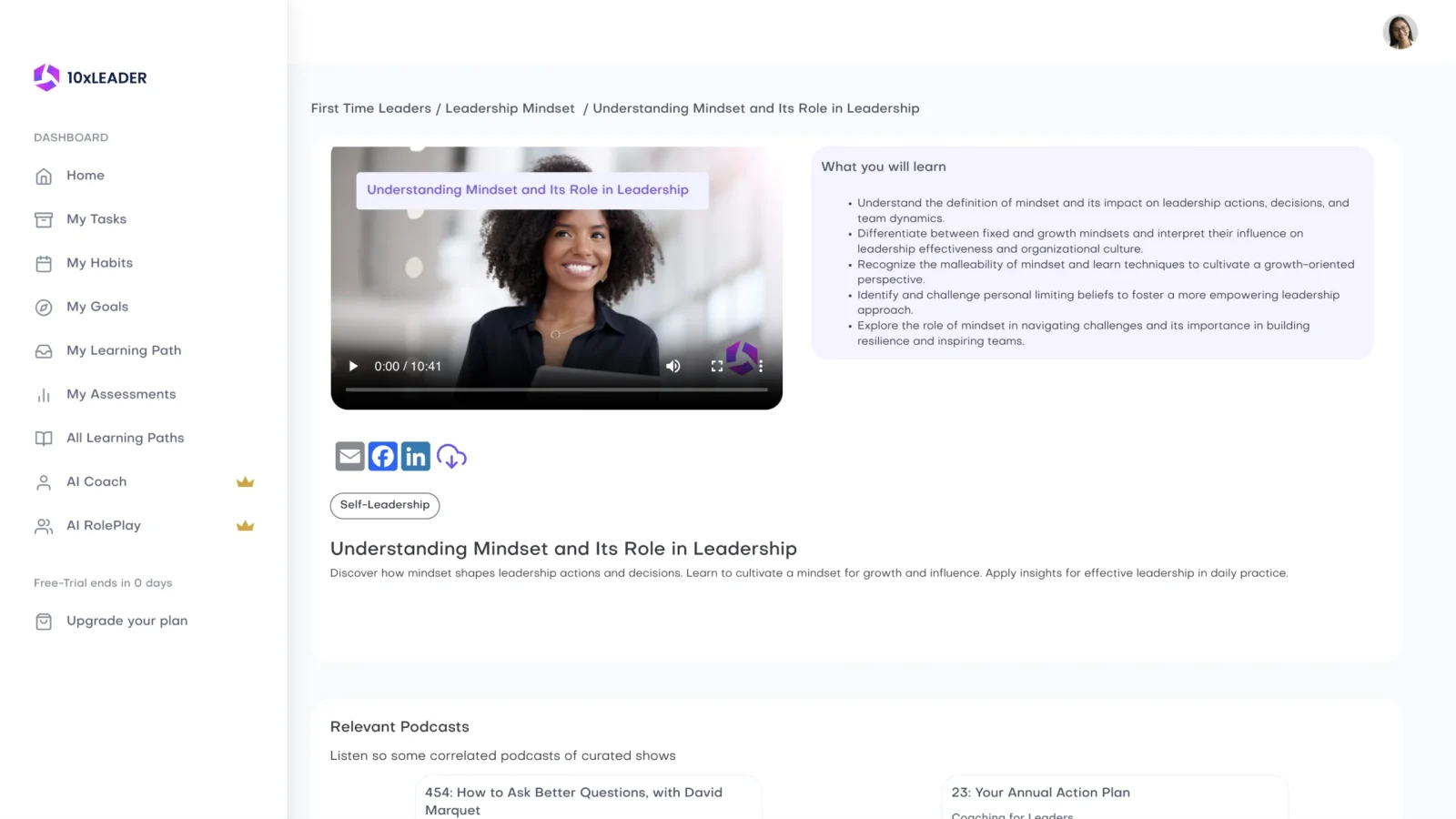
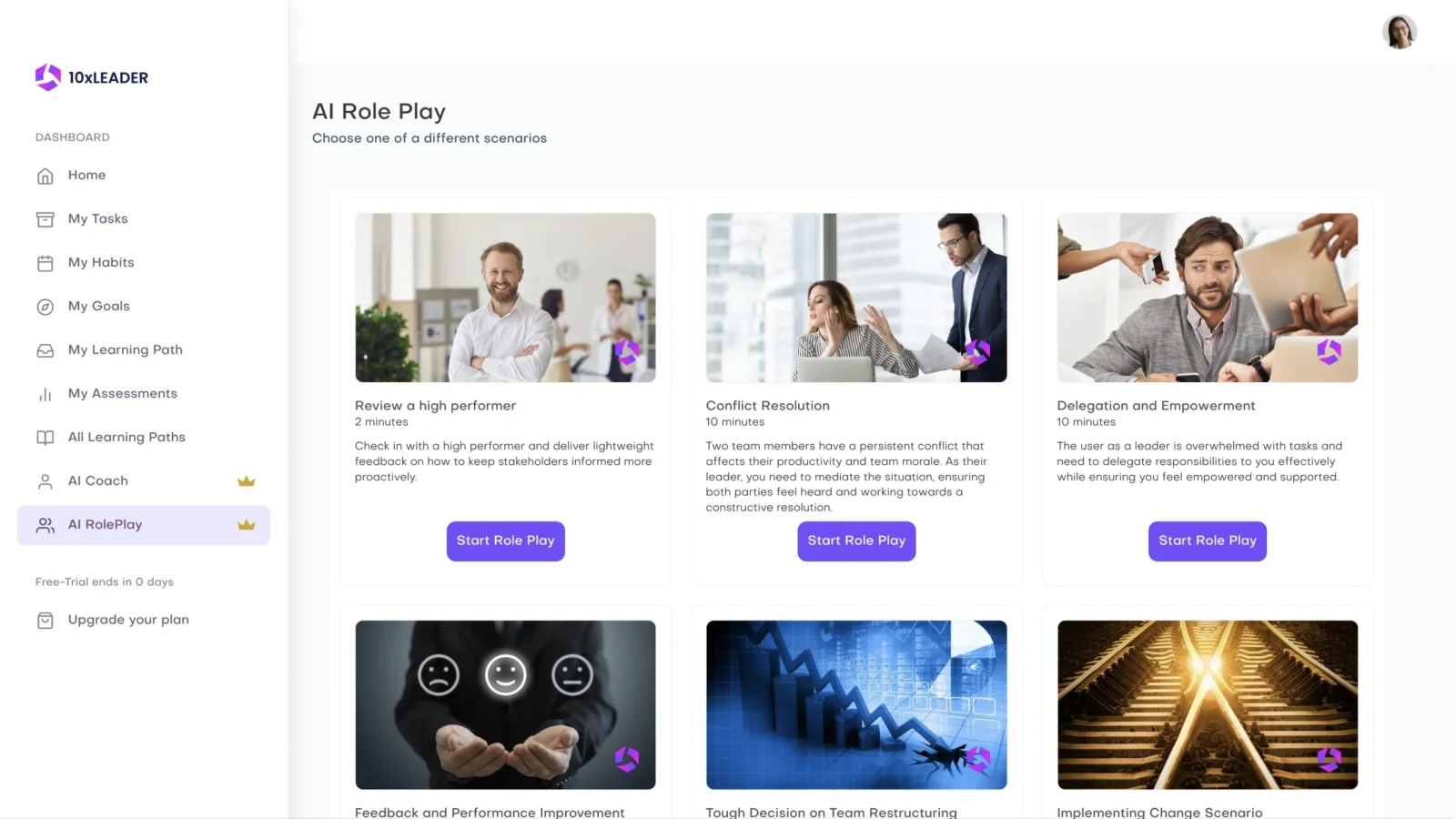
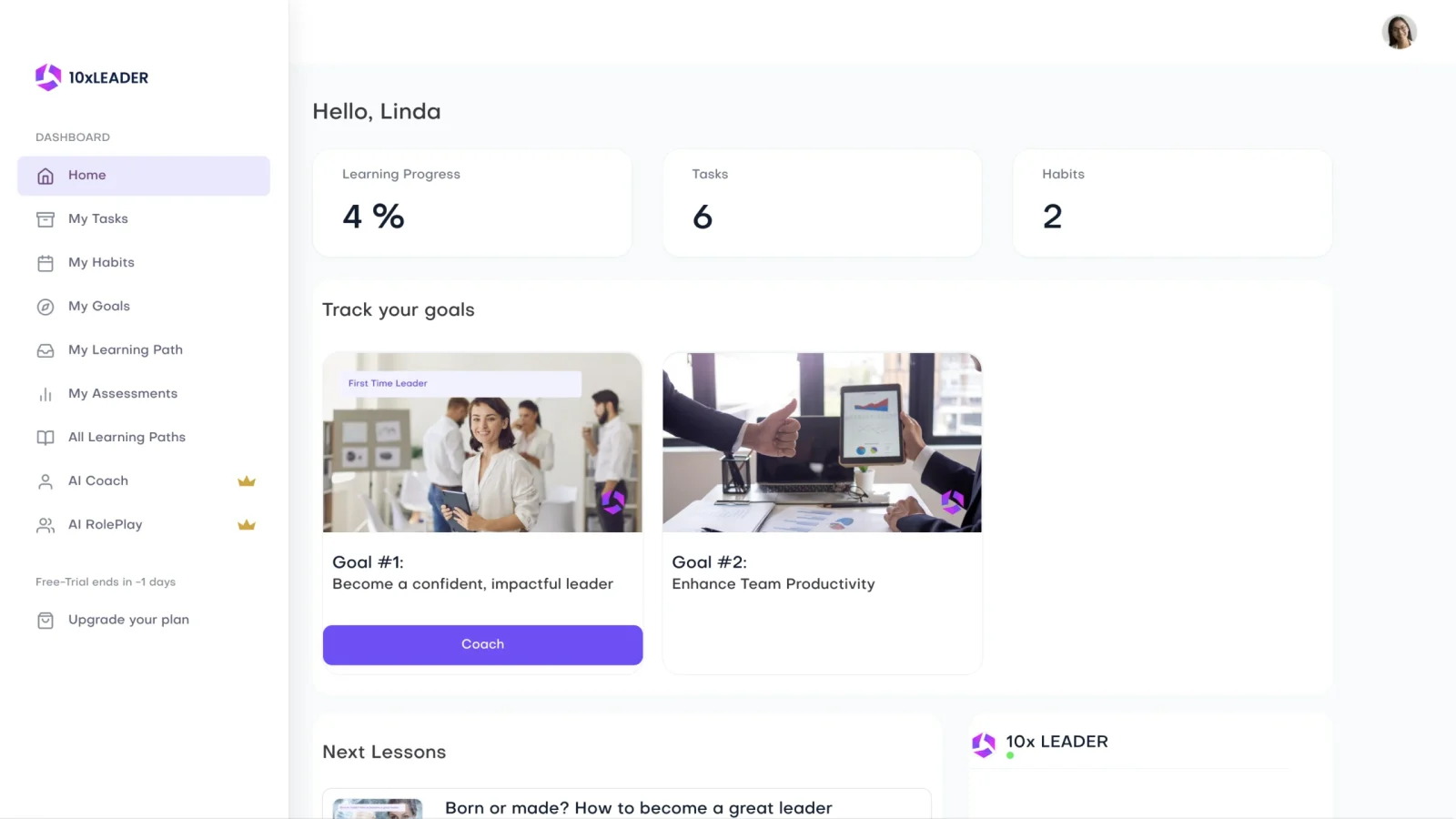
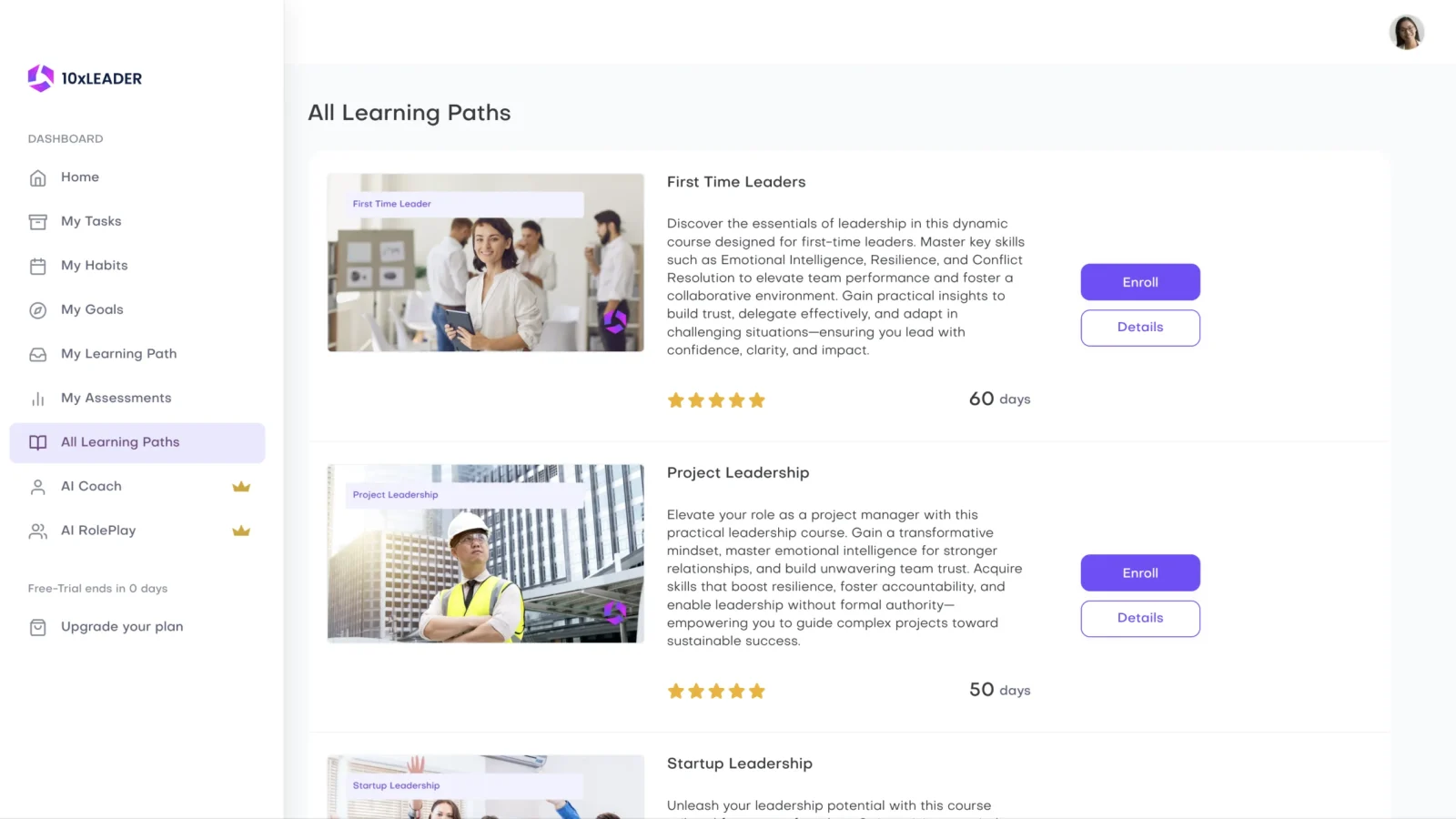
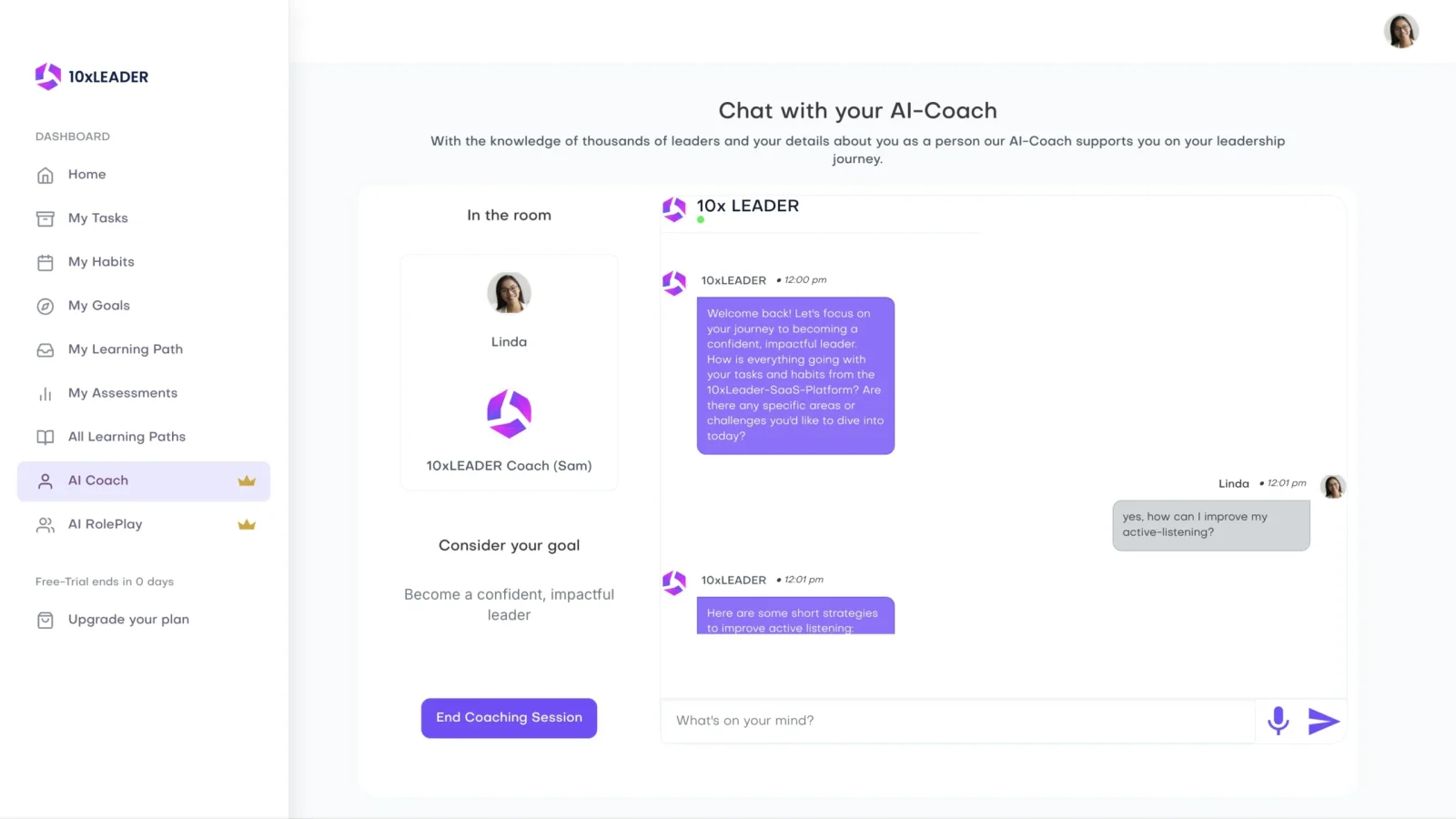
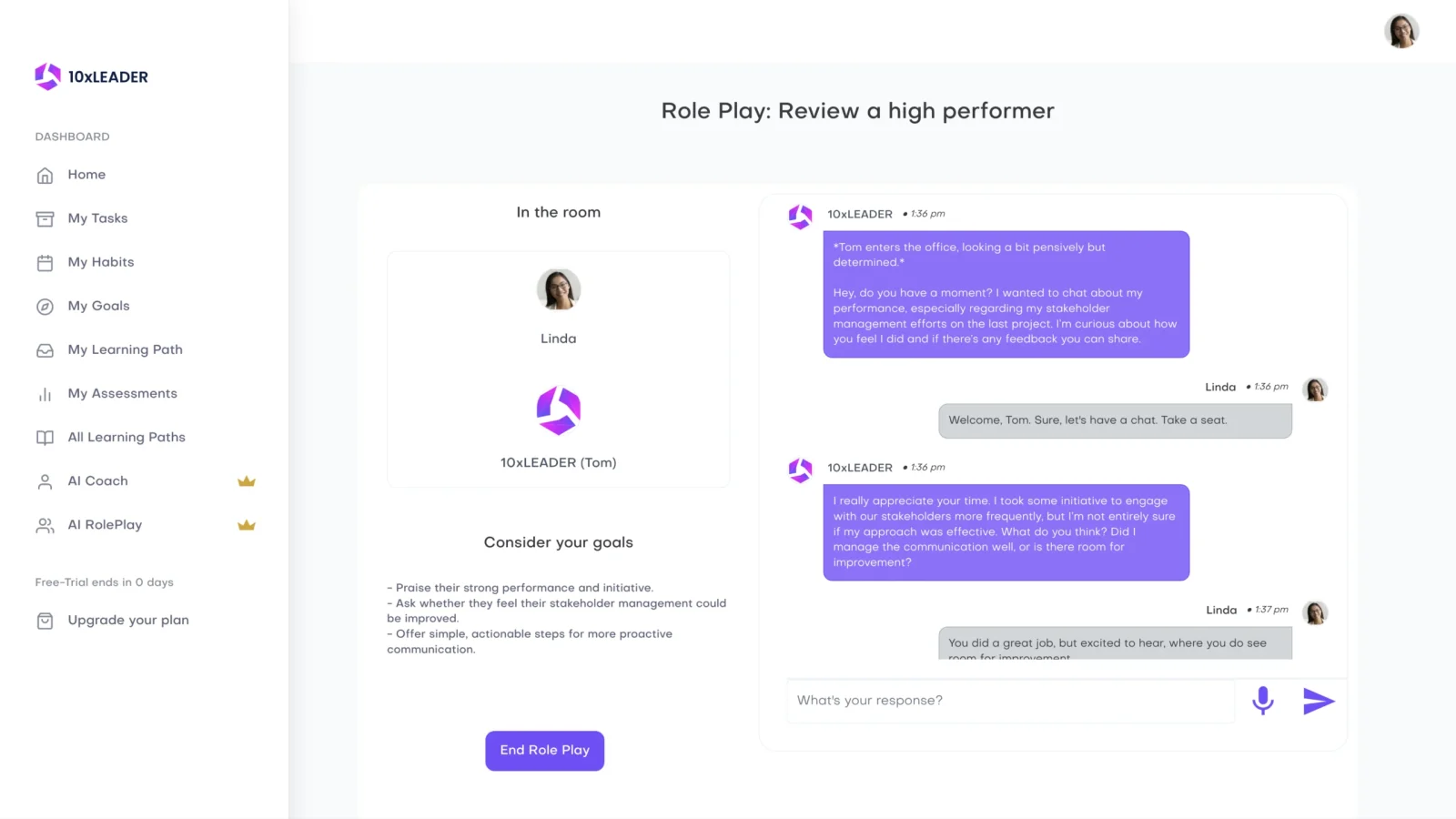
Start your journey with 10xLEADER's innovative features—AI-driven coaching, personalized learning paths, and actionable habits—to redefine leadership in a fast-paced world.


Markus Hofer
C-Level Executive⎥Tech-Enthusiast⎥Lecturer⎥Author ⎥Researcher
Markus Hofer is lecturer at several universities and C-Level Executive in a large corporate. Markus published several books in the field of leadership. His current research project is about AI and leadership. With more than two decades of leadership experience he often writes articles about leadership and management.

Adaptive Seo Briefs 2026 06 08
Practical leadership guide Built around leadership practice AI coaching + realistic role-play Designed for busy managers See the Leadership Sprint Explore AI role-play On this page DecisionDiagnosis for the...
Adaptive Seo Briefs 2026 06 01
Practical leadership guide Built around leadership practice AI coaching + realistic role-play Designed for busy managers See the Leadership Sprint Explore AI role-play On this page DecisionDiagnosis for the...
Leadership Development for Busy Managers: Build Better Habits Without Pulling Leaders Out of the Work
A practical guide for HR, L&D, COO, PMO, and transformation leaders on designing leadership development for busy managers that fits the week, builds real behavior change, and improves execution.
Adaptive Seo Briefs 2026 05 25
Practical leadership guide Built around leadership practice AI coaching + realistic role-play Designed for busy managers See the Leadership Sprint Explore AI role-play On this page KPI triggerMonday decisionRead...
